The architecture of Agentic BPA
Automation without headaches: How autonomous AI agents reliably handle routine tasks. Learn how our 4-layer architecture saves you time and avoids errors – without any technical knowledge.
The platform at a glance
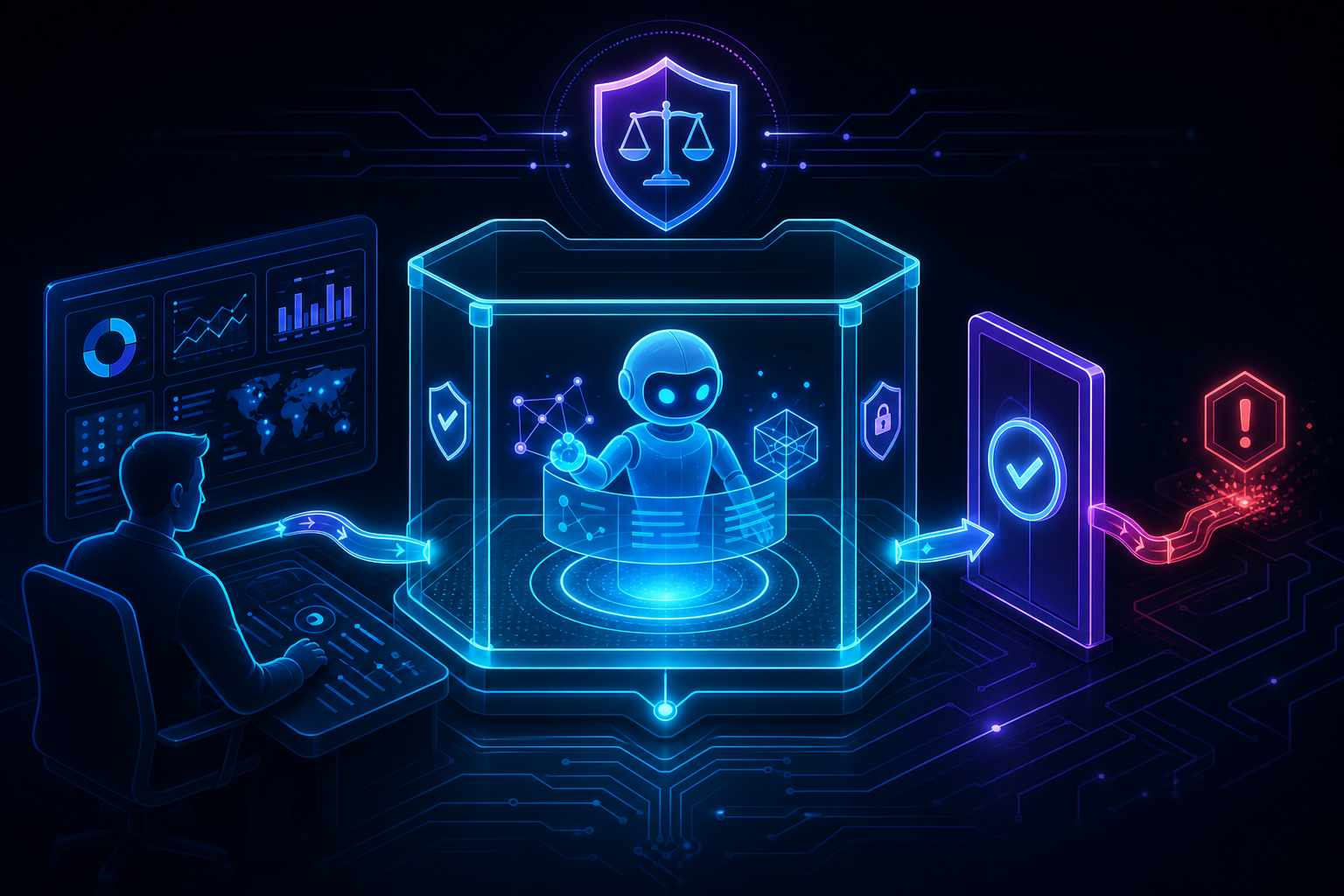
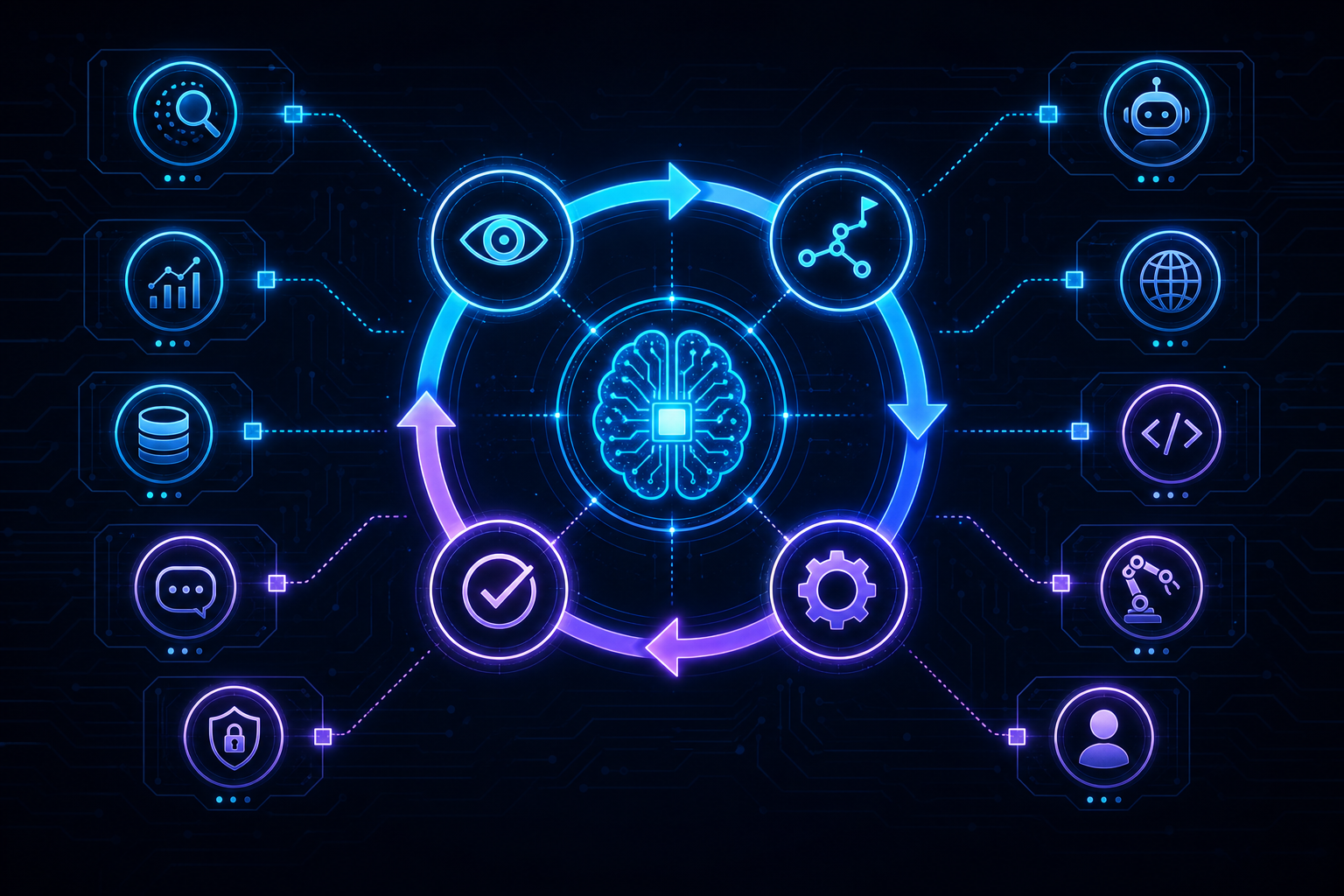
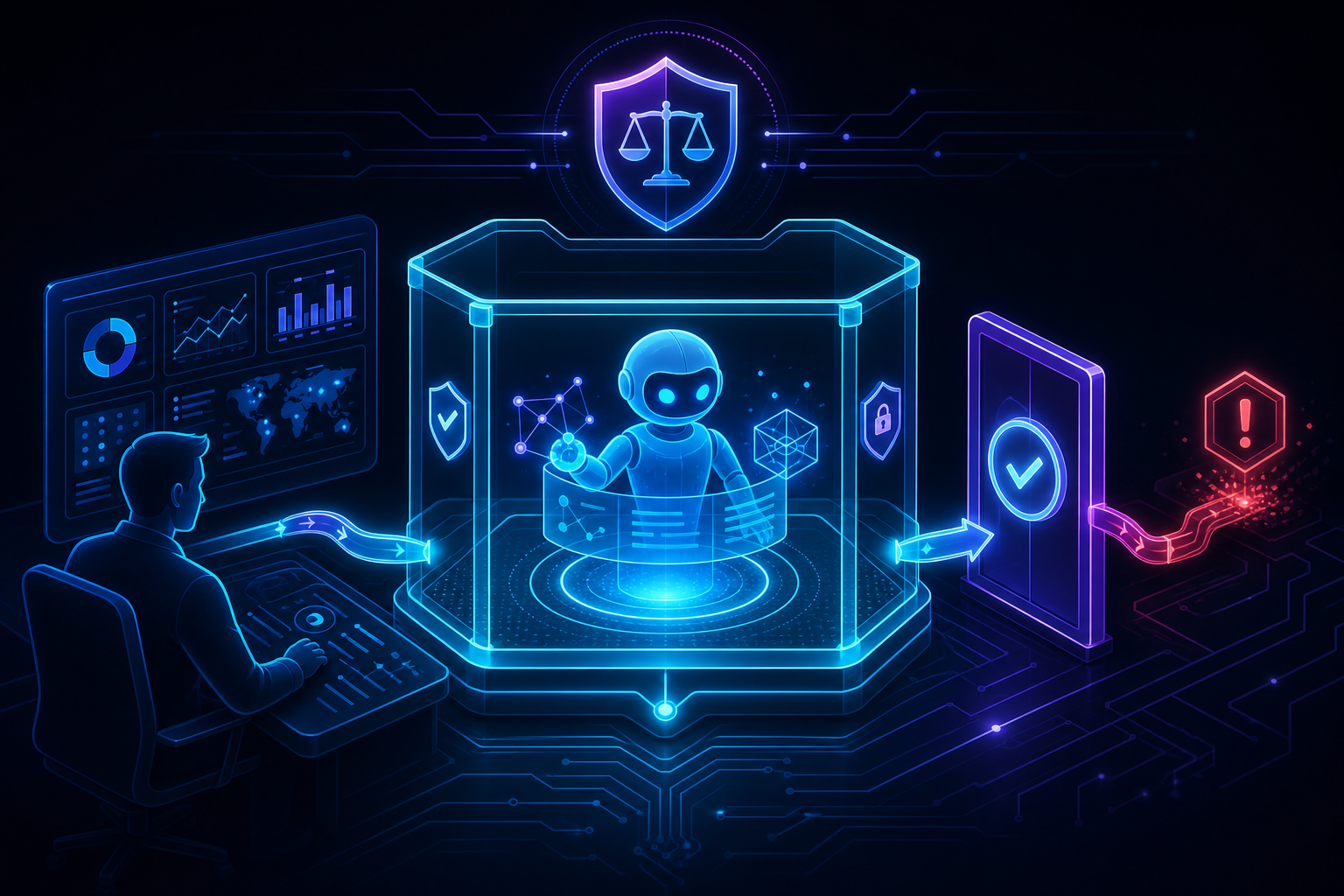
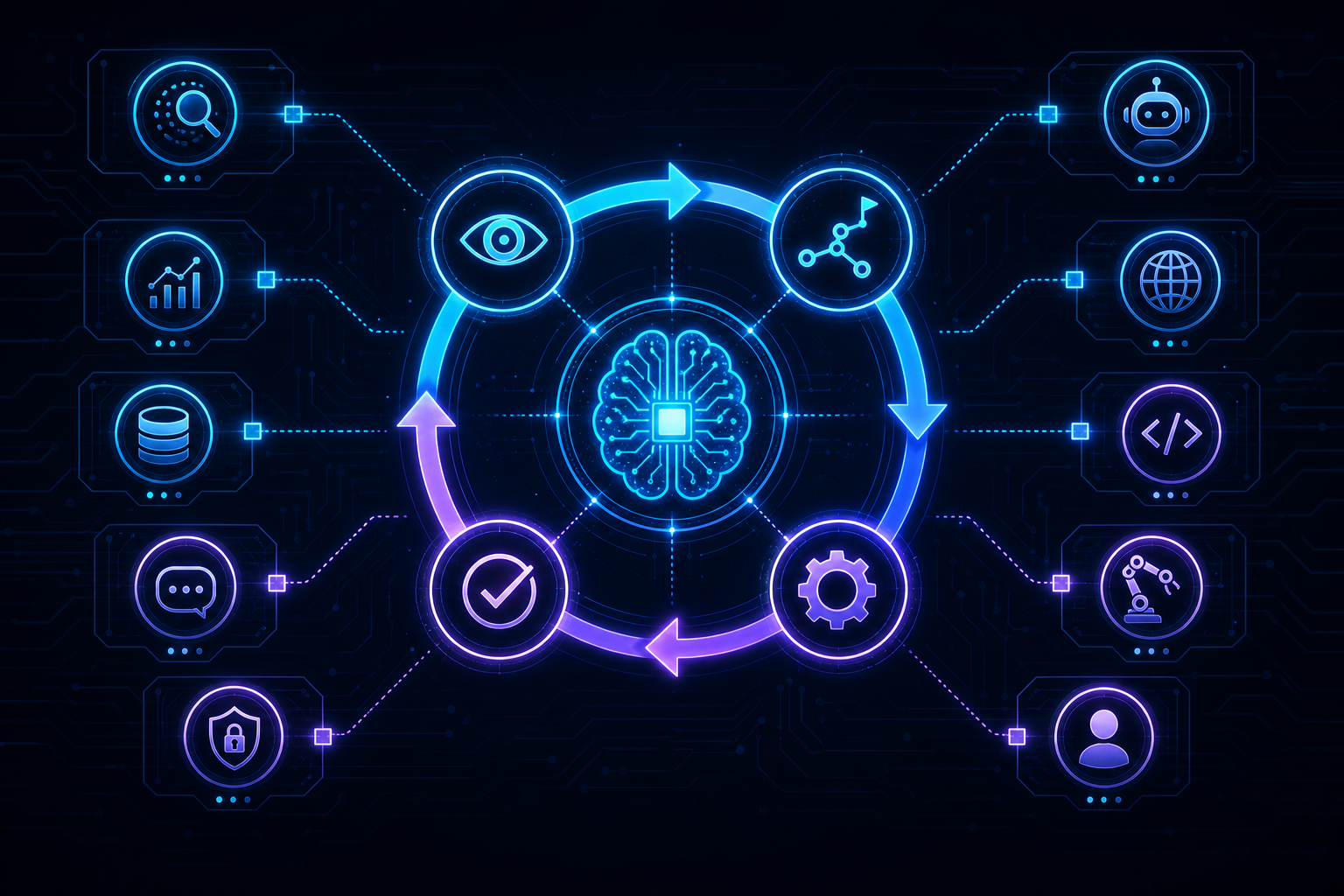
Agentic BPA combines four levels into a consistent platform: Signals from your channels flow via data recording into an orchestration level that controls specialized AI agents - secured by models and knowledge sources - and ultimately triggers verified actions in your target systems.
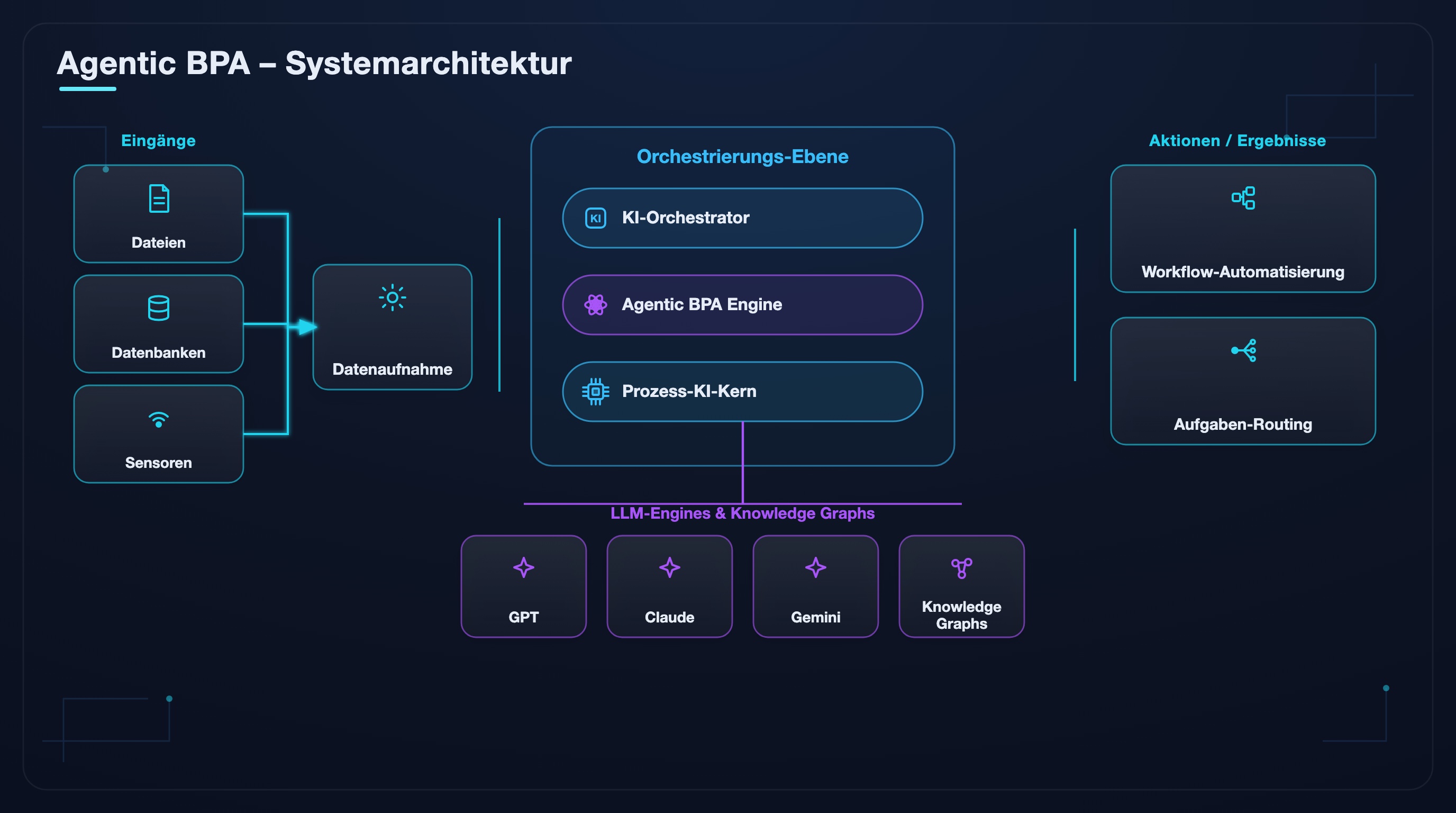
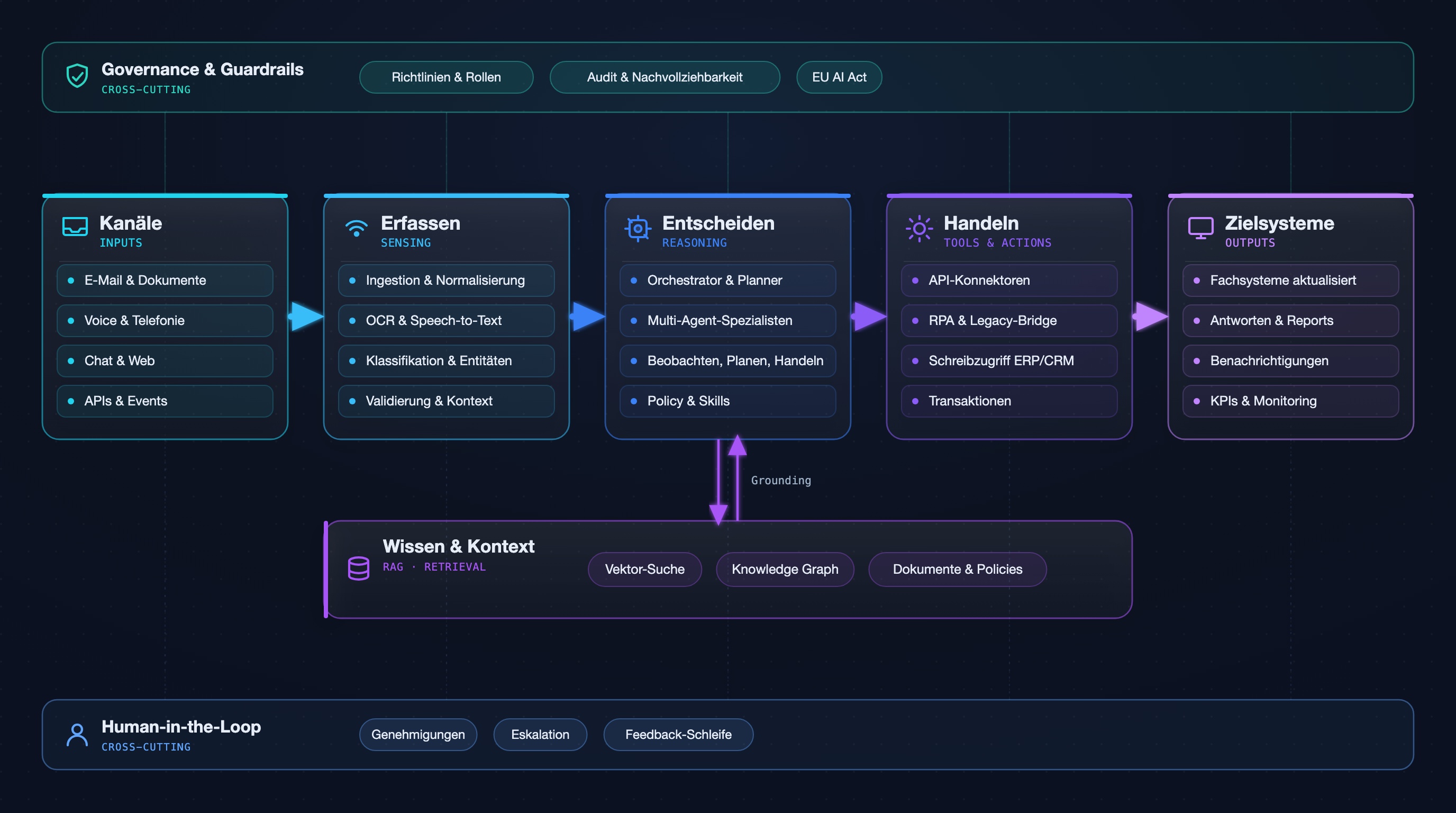
Below, the detailed diagram shows the same flow in greater detail: which components interact at each stage and how governance and human oversight encompass the entire process.
Why traditional AI projects fail (and how to do it better)
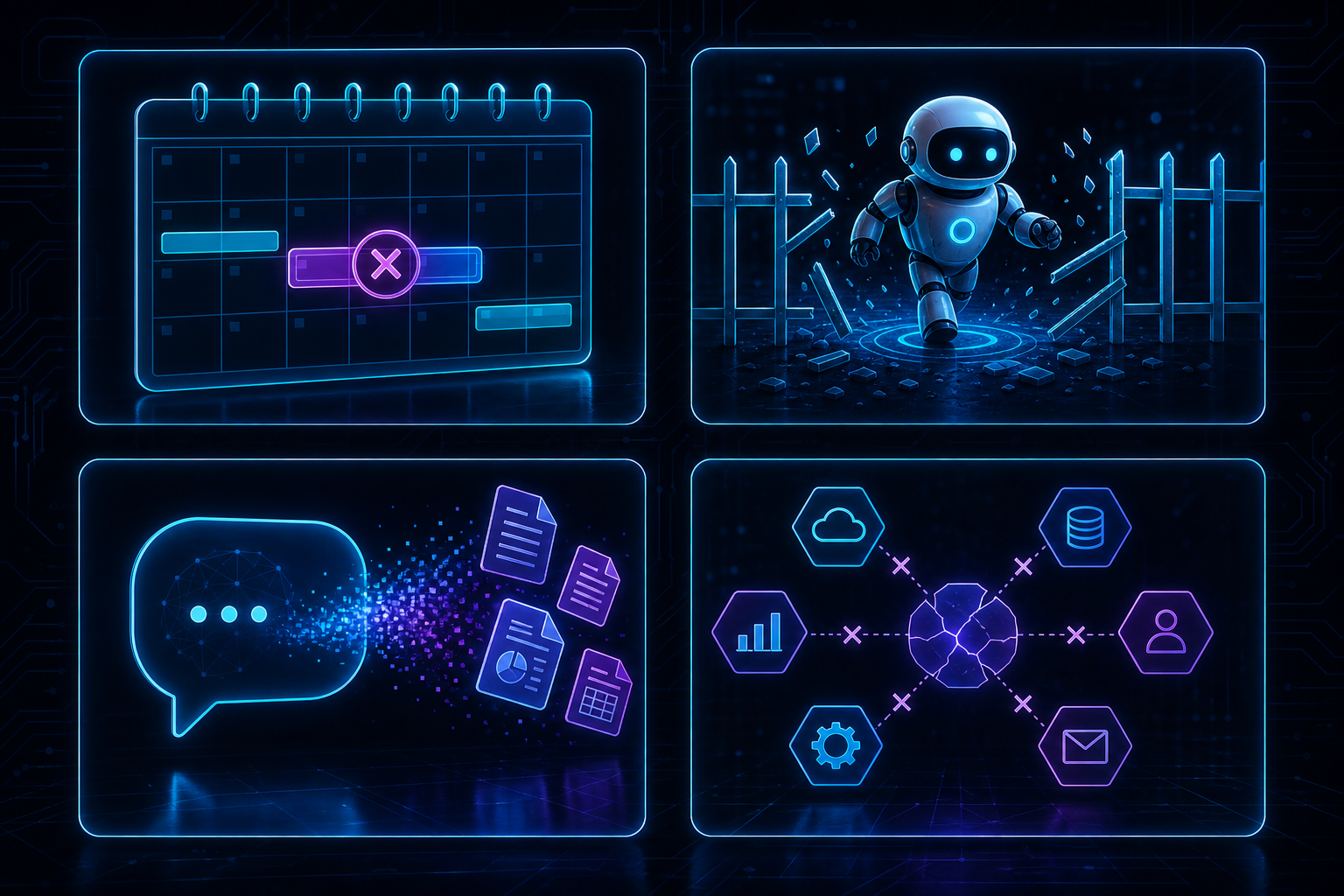
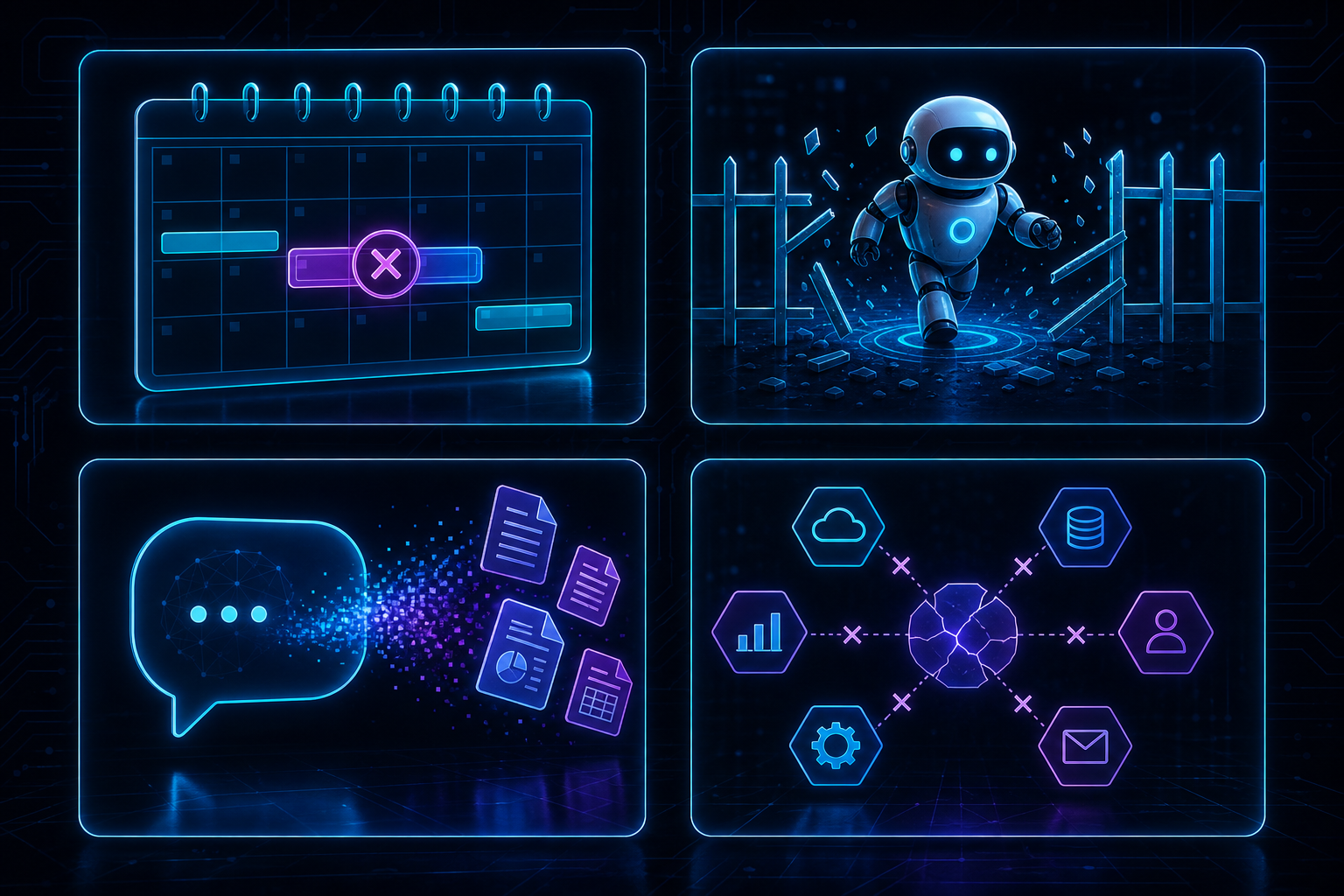
Many companies experiment with AI - and get stuck. These are the patterns we will see most often in 2026. They have less to do with the model than with the lack of architecture and control.
The chatbot that books twice
Many companies let AI book appointments directly in the chat - without a connected calendar as the only source of truth. Consequence: double bookings and made-up times. Employees have to check every booking manually - trust and efficiency suffer.
Automation without guardrails
Quickly built AI automations without approvals and limits lead to incorrect bookings, compliance risks and actions that no one can stop. Autonomy needs clear rules - not blind trust in the model.
Trapped in the chat window
Teams copy customer data and contracts into public chatbots. The answers stay in the process, never end up in the CRM - and sensitive information leaves the company uncontrolled. Productivity, yes, but without structure and without traceability.
Isolated solutions instead of consistent processes
Every new connection between AI and specialist software is programmed individually - expensive, slow and error-prone. This means that automation remains in the pilot phase instead of becoming part of day-to-day business.
Agentic BPA addresses exactly these gaps: a platform with guardrails, consistent integrations and understandable decisions - instead of isolated chat experiments.
From RPA to BPA
Classic robotic process automation follows rigid if-then logic. Agentic BPA replaces scripts with targeted agents that sense context, plan and respond dynamically.
| Dimension | Classic RPA | Agentic BPA |
|---|---|---|
| Execution logic | Rigid scripts and fixed processes | Goal-oriented - the agent finds the way itself |
| Responding to Changes | Breaks with any system or interface change | Adapts and looks for alternatives |
| Unstructured data | Hardly usable without extensive pre-processing | Understands emails, documents and conversations straight away |
| Control | Fixed rules from start to finish | Flexible, oriented towards business goals |
The difference is not “another tool”, but a new operating model: processes are implemented onTargetaligned, not to rigid sequences of steps. This makes automation resilient to everyday changes in software and processes.
Sensing & data acquisition
Before an agent takes action, he or she must understand what is currently happening in the company. To do this, it collects relevant information from your systems - in a controlled and data-efficient manner.
- check_circlePreload context:Customer data and process steps are compiled before the conversation or process - not improvised in the middle of the action.
- check_circleReleased only:Only fields that you explicitly allow will flow into the system. Sensitive categories (e.g. health data) are excluded from the outset.
- check_circleFrom many sources:Structured master data, emails and conversation notes can together form the context - without employees having to compile everything manually.
AI as a decision engine
The process follows a proven pattern:Plan → Execute → Check. After each step, it is checked whether the goal has been achieved - or whether a human should intervene. During telephone calls, real-time decisions are made separately from long-term follow-up processes - so that conversations remain fluid.
- check_circleAutomatic stops:Upper limits for costs, duration and number of steps prevent endless loops - and report to your team in a timely manner.
- check_circleTwo tempo levels:Every second counts in a call; Complex follow-up processes can take hours or days - both on the same platform.
Corporate knowledge for agents
In order for AI to respond in a well-founded manner instead of inventing, it needs access to your company knowledge - securely, controlled and comprehensible.
- check_circleAnswers with evidence:Decisions are based on the information you provide - not on assumptions made by the model.
- check_circleControlled preloading:Relevant context is gathered before the process. During sensitive steps, the system does not access any data in an uncontrolled manner.
- check_circleProtection of sensitive categories:Certain types of data are generally excluded - regardless of what a user requests.
In this way, “AI that claims something” becomes a digital employee who knows your company reality - and still stays within the limits that you specify.
From conversation to action
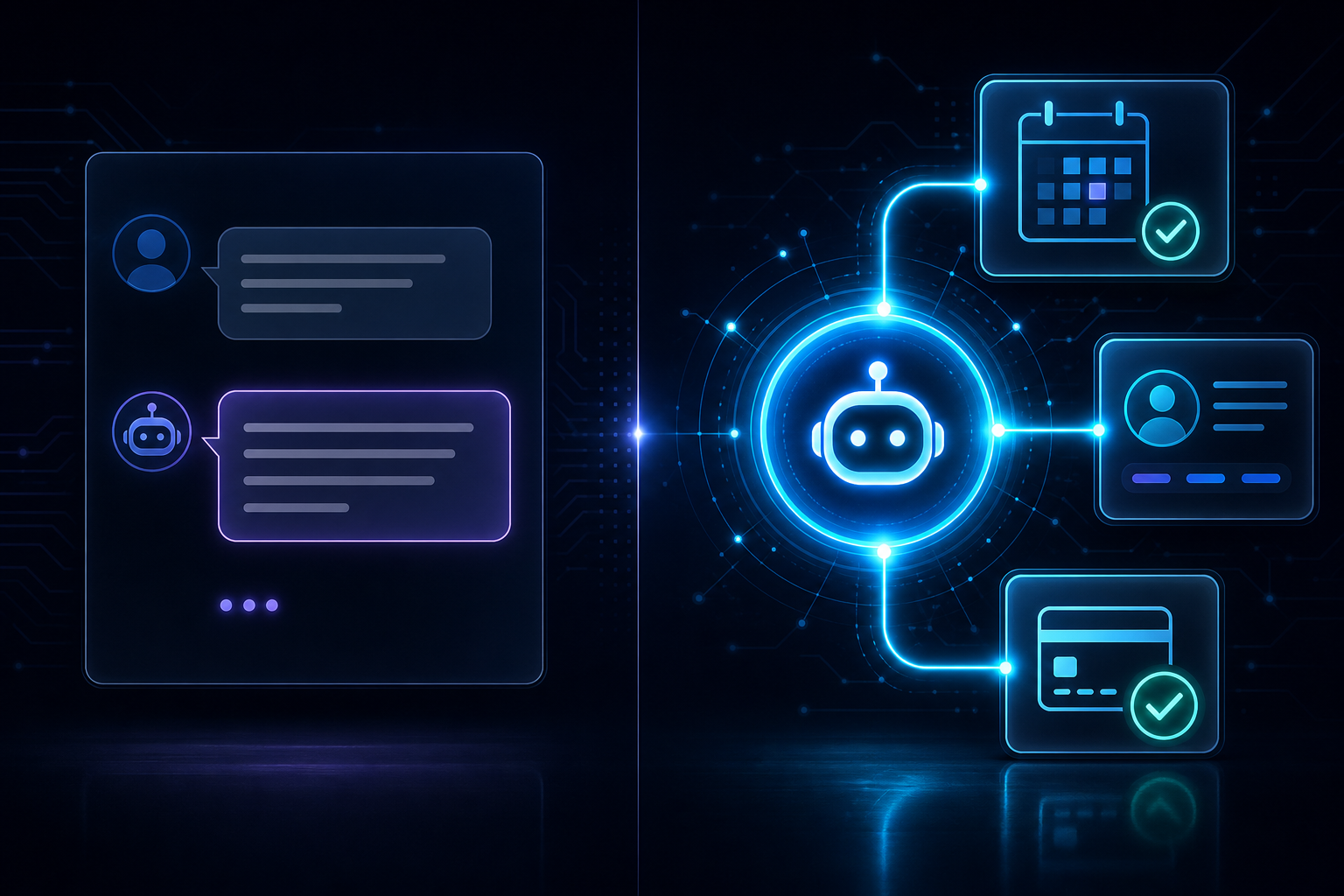
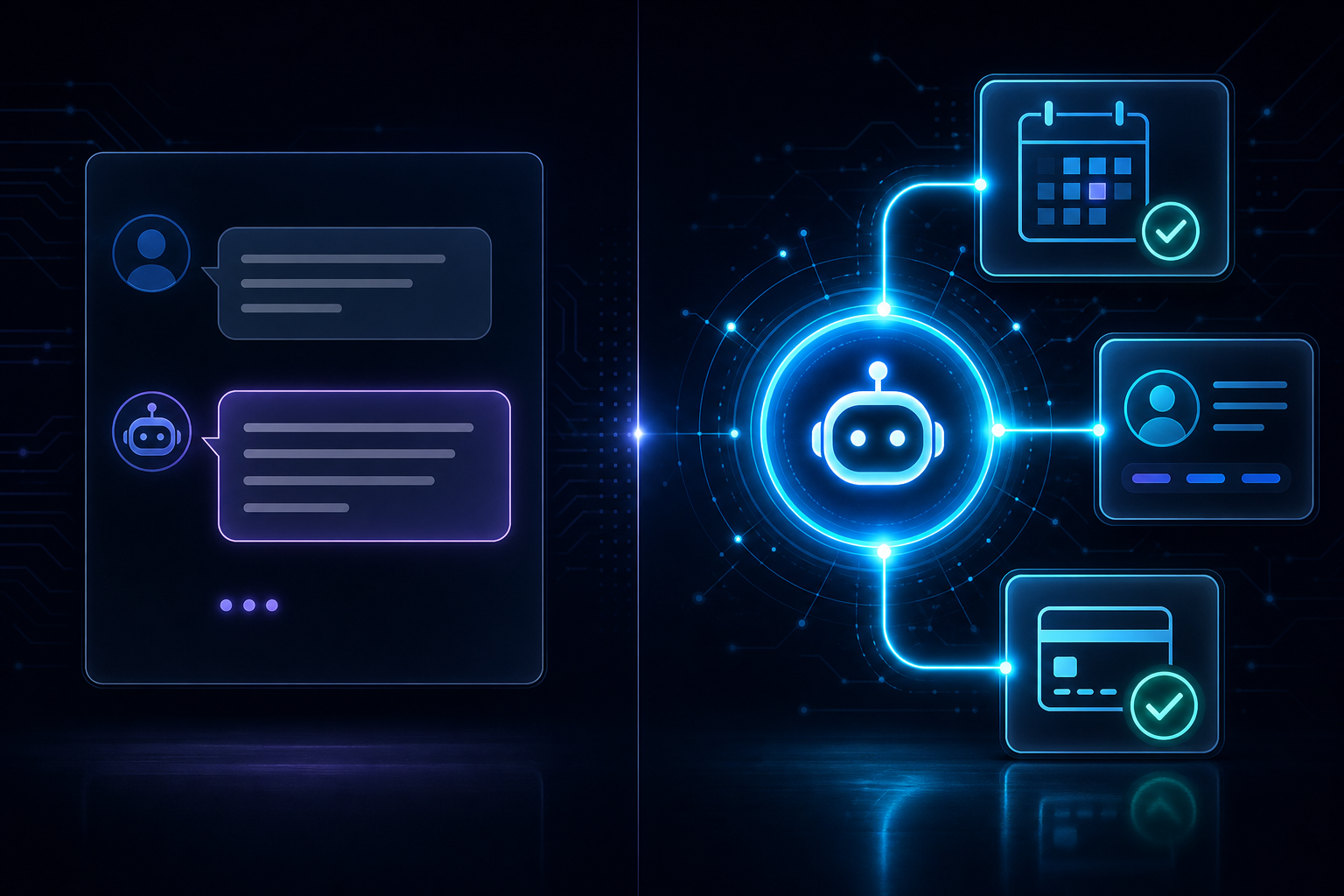
The difference between chatbot and agent: The agent acts. It books appointments, triggers payment processes or updates your CRM - via tested connections, not copied text.
- check_circleVoice, chat and back office:Appointments, tickets and ERP actions via tested connections - not just text in the chat window.
- check_circleEach action exactly once:Even after disruptions or repetitions, no booking or payment will be triggered twice.
- check_circleTest run before the real action:Critical steps can be simulated before they become binding - with a clear preview of what would happen.
Security & Governance
Autonomy without guardrails is the biggest risk of today's AI projects. That's why a fixed set of rules checks every changing action - regardless of the AI model.
- check_circleClear rules before every action:Mandatory fields, amount limits and permitted values are checked automatically - with understandable reasons for rejection.
- check_circleRelease for critical steps:High-risk actions require human consent; During regular operation, agents work autonomously in a defined sandbox under supervision.
- check_circlePermissions & Data Separation:Who can trigger what follows your roles. Customer data remains strictly separated.
- check_circleComprehensible instead of a black box:Decision paths are documented - and you pay per successful execution, not for experiments.